Frequently Asked Questions
The most-asked questions about russian inventions.
What does 'Russian inventions' refer to as a topic?
It is the collective body of scientific, engineering, and technological breakthroughs attributed to people working within Russia or the broader Russian-speaking world, ranging from 18th-century chemistry to modern aerospace. It is not a single project but a wide-ranging category of firsts and innovations catalogued by field and era.
Who are the most frequently cited figures in overviews?
Dmitri Mendeleev (periodic table), Konstantin Tsiolkovsky (theoretical rocketry), and Sergei Korolev (Soviet space program) dominate most introductory discussions. Alexander Popov (radio), Ivan Pavlov (conditioned reflexes), and Mikhail Kalashnikov (assault rifle) also appear constantly in summaries.
Where should a newcomer start reading?
A chronological survey of major firsts—moving from 18th-century chemistry through 19th-century physics into the 20th-century space and nuclear eras—gives the best structural footing. Focusing first on one or two landmark inventions, such as Mendeleev's table or the Sputnik launch, before broadening out helps build context quickly.
What time period does the topic typically cover?
Most encyclopedic treatments span from the 1700s (Peter the Great's modernization push) through the Soviet era and into the 21st century. A smaller number of entries reach back to medieval metallurgy or early printing, but the bulk of well-documented breakthroughs cluster between the 1800s and the 1960s.
Which fields are most heavily represented?
Chemistry, theoretical physics, aerospace engineering, and military hardware make up the largest share of entries. Medicine, materials science, and early electronics (radio, television, phototubes) also feature prominently across the catalog.
What is often called the single most iconic moment?
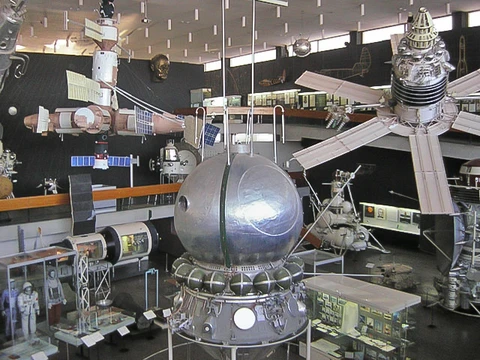
The 1957 launch of Sputnik 1 is the most frequently cited landmark, as it thrust the Soviet space program into global view and ignited the space race. In chemistry circles, Mendeleev's 1869 periodic table is the rival answer you will hear just as often.
Are Soviet-era inventions treated separately from pre-Soviet ones?
Most fan encyclopedias group them under one national umbrella, noting the political context (imperial, Soviet, or post-Soviet) as metadata rather than splitting them into separate sections. The distinction matters mainly for understanding the funding structures and institutional support behind each breakthrough.
What is a common misconception about the topic?
A frequent one is assuming all major Soviet-era achievements were purely state-directed, when many foundational theories—Tsiolkovsky's rocket equations, Mechnikov's germ theory—were developed by independent scholars long before any government program existed. Another is treating 'Russian' and 'Soviet' as interchangeable, even though the USSR encompassed many non-Russian republics.
How does this tradition compare to American or British invention histories?
There is significant overlap, since several breakthroughs (radio, jet engines, nuclear applications) were pursued in parallel across multiple countries and attribution debates remain common. The Russian tradition is often noted for its emphasis on theoretical groundwork preceding practical application, whereas Anglo-American narratives tend to spotlight the inventor-entrepreneur model.
Where can fans go for deeper, entry-level reading?
National academy archives, translated 19th-century lecture series, and documentary histories of specific programs (Sputnik, Baikonur) are popular next steps. For a lighter entry, popular-science books that trace one invention's journey from lab notebook to global impact tend to be the most accessible starting point.